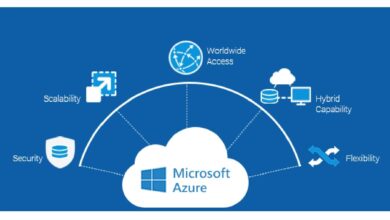
Imagine unlocking the full potential of cloud computing with seamless integration and azure at your fingertips—this is the future of digital transformation, where innovation meets scalability in the most powerful way.





Understanding the Core of and azure

The phrase ‘and azure’ may seem ambiguous at first glance, but in the context of modern cloud computing and digital infrastructure, it often symbolizes the integration of services with Microsoft Azure—the leading cloud platform that powers enterprises worldwide. Whether you’re connecting applications, merging platforms, or building hybrid systems, ‘and azure’ represents a bridge between existing technologies and next-gen cloud capabilities.
What Does ‘and azure’ Really Mean?
In technical documentation, search queries, or architectural diagrams, ‘and azure’ frequently appears when developers or IT professionals describe combining on-premises systems, third-party tools, or other cloud services with Microsoft Azure. It’s not just a conjunction—it’s a conceptual link indicating integration, synergy, and interoperability.
- It often appears in phrases like ‘connect AWS and azure’ or ‘sync local databases and azure.’
- The term reflects a growing trend: multi-cloud and hybrid environments.
- It underscores Azure’s role as a central hub in complex IT ecosystems.
“The future of cloud isn’t about choosing one provider—it’s about making them work together. That’s where ‘and azure’ comes into play.” — TechTarget, 2023
The Evolution of Azure in Enterprise Architecture
Microsoft Azure has evolved from a simple cloud hosting service to a comprehensive ecosystem offering AI, IoT, analytics, and enterprise-grade security. As businesses demand flexibility, the need to integrate Azure with other platforms—hence ‘and azure’—has skyrocketed.
- Launched in 2010 as Windows Azure, it rebranded to Microsoft Azure in 2014.
- Today, it supports over 95% of Fortune 500 companies.
- It offers more data centers globally than any other cloud provider, enabling low-latency integration across regions.
When organizations say they want to connect their CRM and azure, or run analytics on data from multiple sources and azure, they’re not just using a preposition—they’re describing a strategic integration.
Why Integration Matters: The Power of and azure
In today’s hyper-connected digital landscape, siloed systems are a liability. The real power emerges when disparate technologies converge. This is where ‘and azure’ becomes more than a phrase—it becomes a strategy.
Bridging On-Premises and Cloud Environments
Many enterprises still rely on legacy on-premises infrastructure. However, migrating everything to the cloud isn’t always feasible. Azure offers hybrid solutions like Azure Stack and Azure Arc that allow businesses to manage resources both on-prem and in the cloud seamlessly.
- Azure Arc enables governance of servers across environments using Azure policies.
- Azure Stack brings Azure services into on-prem data centers.
- This hybrid approach reduces downtime and increases operational agility.
When companies implement ‘backup systems and azure’, they often use Azure Site Recovery to replicate on-prem VMs to the cloud, ensuring business continuity.
Multi-Cloud Strategies with and azure
No single cloud provider can meet every need. That’s why organizations are adopting multi-cloud strategies—using AWS for certain workloads, Google Cloud for AI, and Azure for enterprise integration. The phrase ‘and azure’ frequently appears in these architectures, highlighting Azure’s role as a unifying layer.
- Azure Logic Apps can trigger workflows in AWS Lambda or Google Cloud Functions.
- Azure API Management exposes APIs from non-Azure services securely.
- Cross-cloud identity management is streamlined via Azure Active Directory.
For example, a retail company might run its e-commerce site on AWS but use ‘analytics and azure’ to process customer data with Power BI and Azure Synapse.
“Azure isn’t just a cloud platform—it’s a connector. When people say ‘and azure’, they mean integration at scale.” — Microsoft Azure Blog
Key Services That Enable and azure Integration
Microsoft Azure provides a robust suite of tools designed specifically to facilitate integration. These services are the backbone of any ‘and azure’ strategy, enabling seamless data flow, automation, and security across platforms.
Azure Logic Apps: Automating Workflows Across Platforms
Azure Logic Apps is a low-code platform that allows users to automate business processes by connecting services both inside and outside Azure. It’s one of the most powerful tools for implementing ‘and azure’ workflows.
- Pre-built connectors for Salesforce, SAP, Twitter, Office 365, and more.
- Supports REST, SOAP, and enterprise protocols like EDI.
- Can trigger actions in non-Azure systems based on Azure events (e.g., new blob storage file triggers an email via SendGrid).
For instance, a logistics company might use Logic Apps to sync shipment data from an on-prem ERP system and azure with real-time tracking updates.
Azure API Management: Exposing and Securing APIs
In a world where APIs are the glue between systems, Azure API Management (APIM) plays a critical role. It allows organizations to publish, secure, and monitor APIs—whether they’re hosted on Azure, on-prem, or in another cloud.
- Acts as a gateway between external consumers and backend services.
- Provides rate limiting, authentication, and analytics.
- Supports integration with AWS API Gateway or Google Cloud Endpoints via custom backends.
When a healthcare provider says they’re using ‘patient portals and azure’, they might be using APIM to expose EHR data securely while maintaining HIPAA compliance.
Azure Event Grid: Real-Time Event Routing
Azure Event Grid enables event-driven architectures by routing events from various sources to appropriate handlers. It’s ideal for scenarios where systems need to react instantly to changes—like file uploads, database updates, or IoT sensor readings.
- Supports custom topics for non-Azure sources.
- Can send events to AWS SNS, Azure Functions, or on-prem webhooks.
- Ensures reliable delivery with retry policies and dead-lettering.
A media company might use Event Grid to process video uploads (from a local server) and azure by triggering transcoding workflows in Azure Media Services.
Security and Compliance in and azure Architectures
When integrating systems across environments, security becomes exponentially more complex. The phrase ‘and azure’ implies trust, governance, and compliance—areas where Azure excels through its comprehensive security framework.
Azure Active Directory: Unified Identity Management
Azure AD (now Microsoft Entra ID) is the cornerstone of identity and access management in hybrid and multi-cloud setups. It enables single sign-on (SSO) and conditional access across Azure and non-Azure applications.
- Supports federated identity with SAML, OAuth, and OpenID Connect.
- Integrates with on-prem Active Directory via Azure AD Connect.
- Enables secure access to AWS, GCP, and SaaS apps using the same identity.
When a financial institution implements ‘legacy banking systems and azure’, Azure AD ensures that only authorized users can access sensitive data, regardless of where the system resides.
Data Encryption and Compliance Standards
Azure meets over 90 compliance certifications, including GDPR, HIPAA, ISO 27001, and SOC 2. This makes it a trusted partner when integrating regulated systems with the cloud.
- Transparent Data Encryption (TDE) protects data at rest in Azure SQL and other services.
- Customer-managed keys (CMK) allow full control over encryption keys.
- Azure Policy can enforce compliance rules across hybrid environments.
For example, a government agency using ‘citizen databases and azure’ can ensure end-to-end encryption and audit trails using Azure Security Center and Azure Monitor.
“Security isn’t a feature—it’s a foundation. Azure builds it in from the start, especially when you’re connecting systems with ‘and azure’.” — Microsoft Security Report 2023
Real-World Use Cases of and azure
Theoretical benefits are one thing, but real-world applications prove the value of ‘and azure’ integration. Across industries, organizations are leveraging Azure to connect, automate, and innovate.
Healthcare: Integrating EHR Systems with Azure AI
Hospitals and clinics often use Electronic Health Record (EHR) systems like Epic or Cerner. By connecting these systems and azure, healthcare providers can apply AI to improve diagnostics and patient care.
- Azure Health Bot provides conversational AI for patient triage.
- Azure Machine Learning analyzes historical data to predict patient readmissions.
- FHIR servers in Azure enable standardized data exchange between EHRs and cloud apps.
One hospital chain reduced patient wait times by 30% after implementing ‘EHR integration and azure’ analytics to optimize staffing.
Retail: Omnichannel Commerce with and azure
Retailers need to synchronize online stores, physical POS systems, inventory databases, and customer data. Azure serves as the central nervous system in this ecosystem.
- Azure Data Factory consolidates sales data from Shopify, Magento, and in-store systems.
- Power BI generates real-time dashboards for inventory and sales trends.
- Azure Cognitive Services personalize recommendations using customer behavior.
A global fashion brand increased conversion rates by 22% after using ‘customer data and azure’ to deliver hyper-personalized marketing campaigns.
Manufacturing: IoT and Predictive Maintenance
Manufacturers are embedding sensors in machinery to monitor performance. By connecting these IoT devices and azure, they can predict failures before they happen.
- Azure IoT Hub collects telemetry data from factory equipment.
- Time Series Insights analyzes sensor data over time.
- Azure Functions trigger maintenance alerts when anomalies are detected.
One automotive plant reduced unplanned downtime by 40% using ‘sensor networks and azure’ predictive analytics.
Cost Optimization in and azure Deployments
While integration offers immense value, it can also lead to cost overruns if not managed properly. Understanding how to optimize spending in ‘and azure’ environments is crucial for long-term success.
Right-Sizing Resources Across Environments
One common issue in hybrid setups is over-provisioning. Azure provides tools like Azure Cost Management and Azure Advisor to analyze usage and recommend optimizations.
- Identify underutilized VMs and scale them down.
- Use reserved instances for predictable workloads to save up to 72%.
- Leverage Azure Hybrid Benefit to use existing Windows Server licenses in the cloud.
For example, a company running ‘on-prem servers and azure’ VMs can use Azure Migrate to assess workloads and right-size cloud instances accordingly.
Monitoring and Governance with Azure Policy
Without proper governance, decentralized systems can lead to ‘shadow IT’ and uncontrolled costs. Azure Policy allows administrators to enforce rules across subscriptions and resource groups.
- Enforce tagging policies to track cost by department or project.
- Restrict deployment to approved regions to avoid high-cost zones.
- Automatically shut down non-production VMs during off-hours.
A financial services firm saved $1.2M annually by implementing ‘cost controls and azure’ policies that prevented unauthorized resource creation.
“Cost efficiency isn’t about cutting corners—it’s about smart integration. ‘And azure’ should mean value, not waste.” — Gartner, 2023
Future Trends: What’s Next for and azure?
The concept of ‘and azure’ is evolving alongside technological advancements. As AI, edge computing, and quantum computing mature, Azure’s role as an integrator will only grow stronger.
Azure AI and the Rise of Intelligent Integration
Microsoft is heavily investing in AI, and Azure OpenAI Service brings models like GPT-4 to enterprises. This enables ‘and azure’ scenarios where AI enhances integration.
- Use AI to auto-map fields between disparate systems during data migration.
- Generate natural language summaries of integration logs for faster troubleshooting.
- Implement AI-driven anomaly detection in hybrid networks.
Soon, saying ‘and azure’ might mean not just connecting systems, but making them intelligent.
Edge Computing and Azure Arc
With the explosion of IoT and 5G, data processing is moving closer to the source. Azure Arc extends Azure management to edge devices, Kubernetes clusters, and even AWS/GCP instances.
- Manage 10,000 edge devices from a single Azure portal.
- Deploy consistent security policies across cloud and edge.
- Run Azure services like Azure Machine Learning on-prem or at the edge.
In the near future, ‘and azure’ will mean managing a global network of edge nodes as easily as cloud VMs.
Quantum Computing and Hybrid Solvers
While still in early stages, Azure Quantum offers access to quantum hardware and hybrid solvers. Organizations can combine classical computing and azure quantum algorithms to solve complex optimization problems.
- Optimize supply chain logistics using quantum-inspired algorithms.
- Simulate molecular structures for drug discovery.
- Run hybrid workloads that split tasks between classical and quantum processors.
Though niche today, ‘and azure’ could soon include quantum computing as a mainstream integration point.
What does ‘and azure’ mean in cloud computing?
The phrase ‘and azure’ typically refers to the integration of Microsoft Azure with other systems, platforms, or services—such as on-prem infrastructure, AWS, or third-party applications. It symbolizes hybrid and multi-cloud strategies where Azure acts as a central hub for connectivity, automation, and intelligence.
How can I integrate my on-prem systems with Azure?
You can integrate on-prem systems with Azure using services like Azure Arc, Azure Stack, Azure Site Recovery, and Azure Active Directory Connect. These tools enable seamless management, data synchronization, and identity federation across environments.
Is Azure secure for multi-cloud integrations?
Yes, Azure offers robust security features including Microsoft Entra ID (formerly Azure AD), Azure Security Center, encryption at rest and in transit, and compliance with over 90 global standards. These ensure secure integration across hybrid and multi-cloud setups.
What are the best tools for automating ‘and azure’ workflows?
Azure Logic Apps, Azure API Management, and Azure Event Grid are among the top tools for automating integrations. They support hundreds of connectors, enable real-time event processing, and provide enterprise-grade scalability and monitoring.
How can I reduce costs in my ‘and azure’ architecture?
Use Azure Cost Management, right-size resources, leverage reserved instances, and apply Azure Policy for governance. Also, consider the Azure Hybrid Benefit to save on licensing costs when migrating on-prem workloads to Azure.
The phrase ‘and azure’ is more than a grammatical construct—it’s a symbol of modern digital integration. As businesses continue to adopt hybrid and multi-cloud strategies, Azure’s role as a unifying platform becomes increasingly vital. From automating workflows with Logic Apps to securing identities with Microsoft Entra ID, the tools are in place to make ‘and azure’ a powerful reality. Looking ahead, advancements in AI, edge computing, and quantum will only deepen this integration, making Azure not just a cloud provider, but a central nervous system for the digital enterprise.
Further Reading: