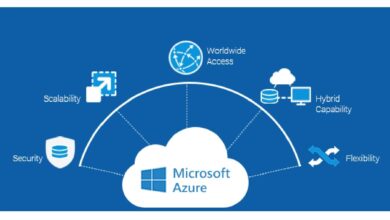
Managing cloud costs doesn’t have to feel like navigating a maze blindfolded. With the Azure Cost Calculator, you gain clarity, control, and confidence in your Microsoft Azure spending—turning guesswork into precise planning.






What Is the Azure Cost Calculator?

The Azure Cost Calculator is a free, web-based tool provided by Microsoft that helps businesses, developers, and IT decision-makers estimate the cost of running services on Microsoft Azure. Whether you’re planning a new cloud migration, scaling an existing environment, or just exploring options, this tool gives you a transparent, real-time view of potential expenses before you commit resources.
Core Purpose and Functionality
At its heart, the Azure Cost Calculator is designed for financial forecasting. It allows users to build a virtual representation of their intended Azure infrastructure—selecting virtual machines, storage accounts, networking components, databases, and more—and then calculates the estimated monthly or hourly cost based on configuration choices.
- Enables pre-deployment cost modeling
- Supports both pay-as-you-go and reserved instance pricing models
- Offers instant cost updates as configurations change
This dynamic feedback loop makes it an essential first step in any Azure planning process. Unlike post-deployment monitoring tools like Azure Cost Management, the calculator operates in the planning phase, helping prevent budget overruns before they happen.
How It Differs From Azure Pricing Calculator
You might come across references to both the ‘Azure Cost Calculator’ and the ‘Azure Pricing Calculator.’ In reality, these refer to the same tool—Microsoft has used both names interchangeably. The official name, as of recent updates, is the Azure Pricing Calculator, hosted at azure.microsoft.com/pricing/calculator.
Despite the naming confusion, its function remains consistent: to provide a user-friendly interface for estimating Azure service costs. It’s important to note that this is not the same as Azure TCO (Total Cost of Ownership) Calculator, which compares on-premises infrastructure costs to Azure cloud costs. The Azure Cost Calculator focuses purely on Azure service pricing, not comparative analysis.
“The Azure Cost Calculator is the financial blueprint for your cloud journey—build it right from the start.”
Why the Azure Cost Calculator Is a Game-Changer for Businesses
In today’s competitive digital landscape, cost efficiency isn’t just a finance team concern—it’s a strategic imperative. The Azure Cost Calculator empowers organizations to make informed decisions, align IT spending with business goals, and avoid costly surprises down the road.
Eliminates Budget Guesswork
One of the biggest challenges in cloud adoption is predicting costs. Traditional IT budgeting relies on fixed hardware costs, but cloud pricing is dynamic, usage-based, and highly configurable. Without a tool like the Azure Cost Calculator, teams risk underestimating expenses by 30% or more.
By inputting realistic usage scenarios—such as VM size, data transfer volume, and storage duration—users can generate accurate cost projections. This transparency allows CFOs, CTOs, and project managers to approve cloud initiatives with confidence, knowing the financial impact upfront.
- Reduces risk of overspending on underutilized resources
- Supports better capital allocation decisions
- Facilitates stakeholder buy-in through data-driven proposals
Supports Cloud Financial Management (FinOps)
The rise of FinOps—a cultural and operational practice that brings financial accountability to cloud spending—has made tools like the Azure Cost Calculator indispensable. FinOps teams use the calculator during the ‘plan’ phase of the FinOps lifecycle to establish cost baselines and set spending targets.
When integrated into a broader FinOps strategy, the calculator helps teams:
- Define cost ownership across departments
- Compare pricing models (e.g., pay-as-you-go vs. reserved instances)
- Model ‘what-if’ scenarios for scaling or optimization
According to the FinOps Foundation, organizations that adopt proactive cost modeling tools report up to 35% lower cloud waste.
Step-by-Step Guide to Using the Azure Cost Calculator
Using the Azure Cost Calculator is straightforward, but mastering it requires understanding its features and best practices. Follow this step-by-step guide to get the most accurate estimates for your cloud environment.
Step 1: Access the Tool and Set Your Preferences
Visit https://azure.microsoft.com/en-us/pricing/calculator/ to open the Azure Cost Calculator. Upon arrival, you’ll see a clean interface with a search bar and categories like Compute, Storage, Networking, and Databases.
Before adding services, set your preferences:
- Region: Select the Azure region where your resources will be deployed (e.g., East US, West Europe). Prices vary by region due to data center costs and demand.
- Currency: Choose your preferred currency for cost display.
- Pricing Model: Decide between pay-as-you-go, reserved instances (1 or 3 years), or spot pricing for VMs.
These settings ensure your estimates reflect real-world conditions.
Step 2: Add and Configure Azure Services
Click ‘Add’ to start building your environment. For example, to add a virtual machine:
- Search for ‘Virtual Machines’ or navigate to the Compute section.
- Select a VM series (e.g., B-series for burstable workloads, D-series for general purpose).
- Choose the specific VM size (e.g., B2s, D4s v3).
- Configure settings like OS (Windows/Linux), storage type (SSD/HDD), and data disk count.
- Set usage duration (hours per day, days per month).
The calculator updates the cost in real time. You can add multiple VMs with different configurations to model complex environments.
Step 3: Refine and Export Your Estimate
Once your environment is modeled, review the summary panel. It breaks down costs by service, shows total monthly and annual estimates, and highlights potential savings from reserved instances.
You can:
- Adjust quantities or configurations to see cost impacts
- Apply Azure Hybrid Benefit (if you have existing Windows Server or SQL Server licenses)
- Compare pricing across regions
- Save your estimate to your Microsoft account for future editing
- Export the estimate as a CSV or PDF for sharing with stakeholders
This export feature is particularly useful for budget proposals, vendor comparisons, or internal audits.
Key Features That Make the Azure Cost Calculator Powerful
The Azure Cost Calculator isn’t just a simple price lookup tool—it’s packed with intelligent features that enhance accuracy, usability, and strategic value.
Real-Time Cost Updates
Every time you change a configuration—such as upgrading a VM size or increasing storage capacity—the calculator instantly recalculates the total cost. This real-time feedback allows for rapid iteration and optimization.
For example, if you switch from a D4s v3 to a D8s v3 VM, you’ll immediately see the cost jump from ~$150/month to ~$300/month (depending on region and usage). This instant visibility helps teams balance performance needs with budget constraints.
Support for Reserved Instances and Savings Plans
One of the most powerful cost-saving mechanisms in Azure is the use of reserved instances (RIs) and Azure Savings Plans. The calculator lets you model these options directly.
When you add a VM, you can toggle between:
- Pay-as-you-go: No commitment, highest hourly rate
- 1-year reservation: Up to 72% discount, paid monthly or upfront
- 3-year reservation: Up to 79% discount, greater savings for long-term workloads
The calculator displays the effective hourly rate and total savings, making it easy to justify the upfront investment.
“A 3-year reservation on a D4s v3 VM in East US can save over $1,800 annually compared to pay-as-you-go pricing.”
Integration with Azure Hybrid Benefit
If your organization owns Windows Server or SQL Server licenses with Software Assurance, you can apply Azure Hybrid Benefit (AHB) to reduce VM and database costs by up to 40%.
The Azure Cost Calculator includes a checkbox to enable AHB during VM configuration. When activated, it automatically adjusts the estimated cost to reflect the discounted rate. This feature is critical for enterprises migrating on-premises workloads to Azure, as it highlights immediate cost advantages of cloud adoption.
Common Use Cases for the Azure Cost Calculator
The versatility of the Azure Cost Calculator makes it valuable across a wide range of scenarios—from small startups to large enterprises undergoing digital transformation.
Cloud Migration Planning
When moving from on-premises infrastructure to Azure, IT teams need to forecast cloud costs accurately. The calculator allows them to map existing servers, storage, and databases to equivalent Azure services and estimate monthly expenses.
For example, a company with 10 physical servers can model them as Azure VMs, add associated storage and networking costs, and compare the total to their current data center expenses. This helps build a compelling business case for migration.
Startup Infrastructure Budgeting
Startups often operate under tight budgets and need to maximize every dollar. The Azure Cost Calculator enables founders and CTOs to design a scalable, cost-effective architecture from day one.
They can experiment with different configurations—such as using B-series burstable VMs for development environments or leveraging Azure Blob Storage for cost-efficient data archiving—and see how each choice impacts the bottom line.
Project-Based Cost Estimation
For temporary projects like data analytics campaigns, machine learning experiments, or website launches, the calculator helps define a clear budget. Teams can estimate costs for short-term resource usage and ensure they don’t exceed funding limits.
For instance, a marketing team planning a 3-month campaign can model the cost of a temporary web server, database, and CDN, then get approval before deployment.
Advanced Tips and Best Practices
To get the most value from the Azure Cost Calculator, go beyond basic usage. Apply these advanced strategies to refine your estimates and drive cost efficiency.
Model Multiple Scenarios
Don’t settle for a single estimate. Create multiple configurations to compare options:
- High-performance vs. cost-optimized architecture
- Different regions (e.g., East US vs. Southeast Asia)
- Reserved vs. pay-as-you-go pricing
- Use of spot VMs for fault-tolerant workloads
By saving different scenarios, you can present trade-offs to stakeholders and make data-driven decisions.
Include Hidden Costs
Many users forget to account for indirect costs. The Azure Cost Calculator helps you include often-overlooked expenses such as:
- Data transfer fees (especially egress from Azure to the internet)
- Backup and disaster recovery (Azure Backup, Site Recovery)
- Monitoring and management (Azure Monitor, Log Analytics)
- Security services (Azure Firewall, DDoS Protection)
Adding these components ensures your estimate reflects real-world operational costs, not just compute and storage.
Leverage the API for Automation
For organizations with complex or repetitive estimation needs, Microsoft offers a Billing and Cost Management API that can integrate with the calculator’s data. While the calculator itself is a UI tool, the API allows developers to programmatically retrieve pricing information and build custom cost estimation tools.
This is especially useful for MSPs (Managed Service Providers) or internal IT teams that need to generate hundreds of estimates for clients or departments.
Limitations and How to Work Around Them
While the Azure Cost Calculator is a powerful tool, it has limitations that users should be aware of to avoid inaccurate estimates.
Does Not Include All Azure Services
Not every Azure service is available in the calculator. Some newer or specialized services—like Azure Arc, certain AI/ML tools, or preview features—may not be listed. In such cases, you’ll need to refer to the individual service pricing pages or contact Microsoft sales for quotes.
Workaround: Use the calculator for core services (compute, storage, networking) and supplement with manual research for niche services.
Estimates Are Based on List Prices
The calculator uses standard retail pricing, which may not reflect negotiated enterprise agreements (EA) or Microsoft Partner Network discounts. Organizations with custom pricing contracts should treat the calculator as a baseline, not a final number.
Workaround: Apply a discount factor (e.g., 10–25%) to estimates if you have an EA, or consult your Microsoft account representative for accurate pricing.
No Real-Time Usage Data Integration
Unlike Azure Cost Management, the calculator doesn’t pull actual usage data from your subscriptions. It’s purely a planning tool, not a monitoring solution.
Workaround: Use the calculator for pre-deployment planning, then switch to Azure Cost Management or third-party tools like CloudHealth or Azure Advisor for post-deployment cost tracking and optimization.
Integrating the Azure Cost Calculator Into Your FinOps Strategy
To maximize ROI from your cloud investment, the Azure Cost Calculator should be part of a broader financial operations (FinOps) framework. This means embedding cost awareness into every stage of the cloud lifecycle.
Phase 1: Plan – Use the Calculator for Forecasting
During the planning phase, the calculator is your primary tool for cost modeling. Involve finance, engineering, and operations teams in building estimates to ensure alignment.
- Create standardized templates for common architectures (e.g., web app, data lake)
- Define cost centers and tagging policies early
- Set budget thresholds based on calculator outputs
Phase 2: Optimize – Compare Estimates to Actuals
After deployment, use Azure Cost Management to track actual spending. Compare these numbers to your original calculator estimates to identify variances.
Common discrepancies include:
- Over-provisioned VMs running 24/7
- Unused public IPs or unattached disks
- Higher-than-expected data egress
Use these insights to refine future estimates and optimize existing resources.
Phase 3: Iterate – Continuously Improve Cost Models
Cloud environments evolve. Regularly update your calculator estimates to reflect changes in workload demands, pricing updates, or new service adoption.
Establish a quarterly review process where teams revisit their cost models, apply lessons learned, and adjust budgets accordingly.
How accurate is the Azure Cost Calculator?
The Azure Cost Calculator provides highly accurate estimates based on current list prices and standard configurations. However, actual costs may vary due to usage patterns, discounts, or unaccounted services. It’s best used as a planning tool, not a billing predictor.
Can I save and share my estimates?
Yes. You can save your estimates to your Microsoft account and generate shareable links or export them as CSV/PDF files for collaboration with team members or stakeholders.
Does the calculator include taxes?
No, the Azure Cost Calculator does not include taxes, shipping, or additional fees. These are calculated separately during billing based on your region and tax status.
Is the Azure Cost Calculator free to use?
Yes, the Azure Cost Calculator is completely free. It’s a planning tool provided by Microsoft to help users estimate costs before deploying resources on Azure.
Can I use the calculator for hybrid cloud scenarios?
While the calculator focuses on Azure services, you can model hybrid components like Azure Stack or ExpressRoute. However, on-premises hardware costs must be estimated separately or using the Azure TCO Calculator.
Mastering the Azure Cost Calculator is a critical step toward cloud financial maturity. By leveraging its powerful features, understanding its limitations, and integrating it into a broader FinOps strategy, organizations can achieve greater cost visibility, reduce waste, and make smarter cloud investments. Whether you’re a startup founder, IT manager, or CFO, this tool empowers you to plan with precision and confidence.
Recommended for you 👇
Further Reading: