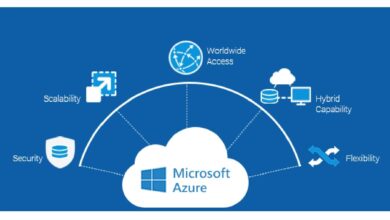
When it comes to cloud computing, ‘azure standard’ isn’t just a service tier—it’s a game-changer. Microsoft’s Azure Standard offerings deliver scalable, secure, and cost-efficient solutions for businesses of all sizes. Let’s dive into what makes it indispensable.






What Is Azure Standard?

The term ‘azure standard’ typically refers to a set of standardized services, pricing tiers, and infrastructure configurations offered by Microsoft Azure. These services are designed to balance performance, availability, and cost, making them ideal for a wide range of enterprise and development use cases. Unlike premium tiers, Azure Standard provides a reliable middle ground—offering robust features without the premium price tag.
Defining the Azure Standard Tier
Azure Standard is not a single product but a classification used across various Azure services such as Virtual Machines, Storage, Networking, and App Services. For example, in Azure Virtual Machines, the ‘Standard’ tier includes VMs with guaranteed availability SLAs, persistent storage, and integration with Azure Backup and monitoring tools. These VMs are suitable for production workloads that require stability and moderate performance.
- Available across compute, storage, and networking services
- Backed by Service Level Agreements (SLAs)
- Designed for production-grade applications
Microsoft clearly defines these tiers in its official documentation, ensuring transparency for developers and IT decision-makers. You can explore more about Azure service tiers on the Microsoft Learn platform.
How Azure Standard Differs from Basic and Premium Tiers
Understanding the differences between Azure’s service tiers is crucial for optimizing cost and performance. The ‘Basic’ tier is typically used for development, testing, or non-critical workloads. It lacks features like load balancing, auto-scaling, and high-availability guarantees. In contrast, the ‘Premium’ tier offers enhanced performance, faster storage (like SSDs), and advanced security features—but at a significantly higher cost.
Azure Standard sits perfectly in the middle. It includes:
- High availability with 99.9% uptime SLA
- Support for enterprise-grade security and compliance
- Integration with Azure Monitor and Azure Security Center
“Azure Standard delivers the sweet spot between cost and capability—ideal for businesses scaling into the cloud without overcommitting resources.” — Microsoft Azure Architect Guide
Key Features of Azure Standard Services
Azure Standard isn’t just about affordability—it’s packed with features that empower organizations to build resilient, scalable, and secure cloud environments. These features span across compute, storage, networking, and management tools, making it a comprehensive solution for modern IT infrastructure.
Compute Capabilities in Azure Standard
In the realm of compute, Azure Standard Virtual Machines (VMs) are among the most widely used resources. These VMs come in various sizes (A, D, E, F series) tailored for different workloads—ranging from web servers to enterprise applications. They support both Windows and Linux operating systems and are integrated with Azure Automanage for automated maintenance.
Key advantages include:
- Guaranteed CPU and memory allocation
- Support for managed disks with encryption
- Seamless integration with Azure Kubernetes Service (AKS)
For developers, this means predictable performance and easier capacity planning. You can learn more about Azure VM sizes and pricing on the official Azure pricing page.
Storage Options Under Azure Standard
Storage is a cornerstone of any cloud strategy, and Azure Standard offers several reliable options. The most common is Standard Storage, which includes Blob, File, Queue, and Table storage services. While it uses HDD-based storage (as opposed to SSD in Premium), it’s optimized for durability, availability, and cost-efficiency.
Standard Storage is ideal for:
- Backup and archive data
- Static website hosting
- Development and testing environments
It supports geo-redundant storage (GRS), ensuring your data is replicated across multiple data centers for disaster recovery. This makes Azure Standard a trusted choice for organizations prioritizing data resilience without breaking the bank.
Networking and Security Features
Azure Standard includes robust networking capabilities such as Virtual Networks (VNet), Load Balancers, and Network Security Groups (NSGs). These components allow you to segment traffic, control access, and secure your cloud environment.
Security features in the Standard tier include:
- Role-Based Access Control (RBAC)
- Integration with Azure Active Directory (AAD)
- DDoS protection (basic tier included)
While advanced threat detection and firewall capabilities are part of the Premium tier, Azure Standard provides a solid foundation for secure cloud operations. For more details, visit Azure Virtual Network documentation.
Azure Standard vs. Other Cloud Providers
To truly appreciate the value of ‘azure standard’, it’s essential to compare it with similar offerings from competitors like AWS and Google Cloud Platform (GCP). Each provider has its own naming conventions and tier structures, but the underlying principles of balancing cost and performance remain consistent.
Comparison with AWS EC2 Standard Instances
Amazon Web Services (AWS) offers EC2 instances that are comparable to Azure Standard VMs. For example, AWS’s M5 and T3 instance families are general-purpose VMs similar to Azure’s D and E series. Both provide balanced CPU, memory, and networking resources suitable for most applications.
However, Azure Standard has a few distinct advantages:
- Tighter integration with Microsoft 365 and Active Directory
- Better hybrid cloud support via Azure Arc and Azure Stack
- Unified billing and management through the Azure Portal
For organizations already invested in the Microsoft ecosystem, Azure Standard offers a smoother transition and lower operational overhead.
Google Cloud’s Equivalent: Standard Machine Types
Google Cloud Platform (GCP) refers to its general-purpose machines as ‘Standard Machine Types’—such as the N2 and N2D series. Like Azure Standard, these are designed for consistent performance and reliability.
Key differences include:
- GCP often offers lower pricing for sustained workloads
- Azure provides more built-in compliance certifications (e.g., FedRAMP, HIPAA)
- Azure has broader global data center coverage (60+ regions vs. GCP’s 40+)
For enterprises requiring global reach and regulatory compliance, Azure Standard stands out as a more versatile option.
Use Cases for Azure Standard
The flexibility and reliability of Azure Standard make it suitable for a wide array of real-world applications. From small businesses to large enterprises, organizations leverage Azure Standard to modernize infrastructure, reduce costs, and accelerate digital transformation.
Small and Medium Business (SMB) Hosting
For SMBs, Azure Standard provides an affordable entry point into the cloud. Companies can host websites, run CRM systems, or deploy internal applications without the need for on-premise servers.
Common deployments include:
- Windows Server VMs for file sharing and domain control
- SQL Server on Azure VMs for database hosting
- Static websites using Azure Blob Storage and CDN
This reduces capital expenditure and allows IT teams to focus on innovation rather than maintenance.
Enterprise Application Migration
Large organizations often use Azure Standard as a stepping stone for migrating legacy applications to the cloud. The predictable pricing and high availability make it ideal for lifting and shifting workloads like ERP, HR systems, and internal portals.
Benefits include:
- Minimal downtime during migration
- Seamless integration with on-premise Active Directory
- Support for hybrid networking via ExpressRoute
Microsoft’s Azure Migrate tool further simplifies this process, offering assessment and migration guidance for thousands of VMs.
Development and Testing Environments
DevOps teams frequently rely on Azure Standard to create isolated, reproducible environments for testing and staging. These environments mirror production setups, ensuring code quality and reducing deployment risks.
Features that support this use case:
- Quick provisioning via Azure Resource Manager (ARM) templates
- Integration with Azure DevOps for CI/CD pipelines
- Cost control with budget alerts and spending caps
By using Azure Standard, teams can maintain consistency across environments while avoiding the high costs of premium resources.
Cost Management and Pricing Models
One of the most compelling aspects of ‘azure standard’ is its cost-effectiveness. Unlike premium tiers that charge for high-performance features, Azure Standard is optimized for predictable, long-term workloads. However, understanding the pricing model is key to maximizing value.
Pay-As-You-Go vs. Reserved Instances
Azure offers multiple pricing options for Standard services:
- Pay-As-You-Go: Ideal for variable or short-term workloads. You pay only for what you use, with no long-term commitment.
- Reserved Instances (RIs): Commit to 1 or 3 years for up to 72% savings on VMs and storage.
- Spot Instances: Use unused capacity at steep discounts (up to 90%), though with no uptime guarantee.
For stable, production-grade workloads, Reserved Instances are often the best choice. They lock in lower rates and help with budget forecasting. More details are available on the Azure Reserved Instances page.
Cost Optimization Tools
Microsoft provides several tools to help manage and optimize Azure Standard costs:
- Azure Cost Management + Billing: Track spending, set budgets, and receive alerts.
- Azure Advisor: Get personalized recommendations for cost savings, performance, and security.
- VM Right-Sizing: Identify underutilized VMs and resize them to lower tiers.
These tools empower organizations to maintain control over cloud spending while ensuring performance isn’t compromised.
Security and Compliance in Azure Standard
Security is not an afterthought in Azure Standard—it’s built into the fabric of the platform. Microsoft invests over $1 billion annually in cybersecurity and operates one of the most secure cloud infrastructures in the world.
Built-In Security Features
Azure Standard includes a range of security capabilities designed to protect data and applications:
- Encryption at rest and in transit
- Network security groups (NSGs) for traffic filtering
- Integration with Azure Defender for threat protection
While some advanced features like Azure Firewall and Web Application Firewall (WAF) are part of the Premium tier, the Standard tier still provides a strong security baseline.
Compliance Certifications
Azure holds more compliance certifications than any other cloud provider, including:
- GDPR
- ISO 27001
- HIPAA
- FedRAMP
- SOC 1, SOC 2
These certifications ensure that Azure Standard can be used in regulated industries such as healthcare, finance, and government. Organizations can leverage Azure’s Compliance Manager to assess and manage their compliance posture.
Future Trends and Evolution of Azure Standard
As cloud technology evolves, so does the ‘azure standard’ offering. Microsoft continuously enhances its Standard-tier services to meet emerging demands in AI, edge computing, and sustainability.
Integration with AI and Machine Learning
While AI workloads often require GPU-powered VMs (available in Premium tiers), Azure Standard is increasingly used as a supporting layer. For example, Standard VMs can host data preprocessing pipelines, model deployment APIs, or monitoring dashboards for AI applications.
Microsoft’s Azure Machine Learning service integrates seamlessly with Standard-tier resources, enabling hybrid AI architectures that balance cost and performance.
Edge Computing and Hybrid Cloud Expansion
With the rise of IoT and real-time data processing, edge computing is becoming critical. Azure Standard plays a key role in hybrid cloud strategies through services like Azure Stack HCI and Azure Arc, which extend Standard-tier capabilities to on-premise and edge environments.
This allows organizations to maintain consistent management, security, and compliance across distributed infrastructures.
Sustainability and Green Cloud Initiatives
Microsoft has committed to being carbon negative by 2030. Azure Standard contributes to this goal by optimizing energy efficiency in data centers and promoting resource consolidation. Features like auto-shutdown for VMs and intelligent scaling help reduce unnecessary compute usage.
Customers can also use the Azure Sustainability Calculator to estimate the environmental impact of their cloud usage and identify areas for improvement.
What is Azure Standard used for?
Azure Standard is used for hosting production workloads, running enterprise applications, developing and testing software, and building secure, scalable cloud infrastructure. It’s ideal for organizations seeking a balance between performance, reliability, and cost.
Is Azure Standard free?
No, Azure Standard is not free. However, Microsoft offers a free tier with limited access to certain services and a $200 credit for new users to explore Azure, including Standard-tier resources.
How does Azure Standard compare to AWS EC2?
Azure Standard VMs are comparable to AWS EC2’s general-purpose instances (like M5). Azure often provides better integration with Microsoft products and broader compliance certifications, making it preferable for enterprises in regulated industries.
Can I upgrade from Azure Standard to Premium?
Yes, you can easily upgrade from Azure Standard to Premium tiers. Azure allows seamless resizing of VMs and migration of storage, ensuring minimal downtime during upgrades.
Does Azure Standard include backup and disaster recovery?
Yes, Azure Standard supports backup and disaster recovery through services like Azure Backup and Site Recovery. These can be enabled with additional configuration and may incur extra costs.
The ‘azure standard’ tier is more than just a mid-level offering—it’s a strategic foundation for cloud adoption. With its balance of performance, security, and cost-efficiency, it empowers businesses to innovate without overextending their budgets. Whether you’re a startup, SMB, or enterprise, Azure Standard provides the tools you need to succeed in the digital era. As Microsoft continues to enhance its cloud ecosystem, the relevance and capabilities of Azure Standard will only grow, making it a smart long-term investment.
Further Reading: