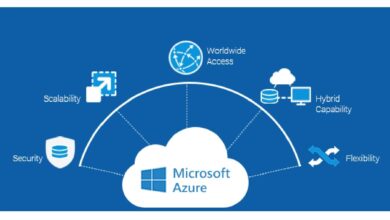
Welcome to the ultimate guide on msft azure, where cloud computing meets innovation. In this comprehensive deep dive, we’ll unravel the power, potential, and practical applications of Microsoft Azure—your gateway to scalable, secure, and intelligent cloud solutions.





What Is msft azure and Why It Dominates the Cloud Market

Microsoft Azure, often referred to as msft azure in technical and financial circles, is one of the world’s leading cloud computing platforms. Launched in 2010, it has rapidly evolved into a powerhouse that competes head-to-head with Amazon Web Services (AWS) and Google Cloud Platform (GCP). But what sets msft azure apart?
Defining msft azure: Beyond Just Cloud Storage
At its core, msft azure is not just about storing data in the cloud. It’s a comprehensive ecosystem offering over 200 services, including computing, analytics, networking, storage, machine learning, and Internet of Things (IoT) capabilities. Whether you’re a startup or a Fortune 500 company, msft azure provides the tools to build, deploy, and manage applications across a global network of data centers.
- Supports hybrid, multi-cloud, and edge computing models
- Offers Platform-as-a-Service (PaaS), Infrastructure-as-a-Service (IaaS), and Software-as-a-Service (SaaS)
- Integrates seamlessly with Microsoft 365, Dynamics 365, and Power Platform
“Azure is not just a cloud platform; it’s a catalyst for digital transformation.” — Satya Nadella, CEO of Microsoft
Market Position and Global Reach of msft azure
According to Gartner’s 2023 Magic Quadrant for Cloud Infrastructure and Platform Services, Microsoft Azure ranks as a leader, praised for its innovation, execution, and integration capabilities. With data centers in over 60 regions worldwide, msft azure offers unmatched geographic coverage—more regions than any other cloud provider.
- Over 2.2 billion people use Microsoft products connected to Azure
- Used by 95% of Fortune 500 companies
- Powering 70% of enterprise AI projects leveraging Microsoft tools
Core Services Offered by msft azure
The strength of msft azure lies in its breadth and depth of services. From virtual machines to AI-driven analytics, the platform supports nearly every modern IT need. Let’s explore the foundational pillars.
Compute Power: Virtual Machines and Containers
msft azure delivers flexible compute resources through Virtual Machines (VMs), Azure Kubernetes Service (AKS), and Azure Functions (serverless computing). You can run Linux or Windows workloads with pay-as-you-go pricing.
- Azure VMs allow full control over OS and configurations
- AKS simplifies container orchestration with built-in DevOps integration
- Azure Functions enable event-driven, serverless code execution
For developers, this means faster deployment cycles and reduced infrastructure overhead. Learn more at Azure Virtual Machines official page.
Storage Solutions: Scalable and Secure
msft azure provides multiple storage options tailored to different needs:
- Azure Blob Storage: Ideal for unstructured data like images, videos, and backups
- Azure Files: Fully managed file shares accessible via SMB or NFS
- Azure Disk Storage: High-performance block storage for VMs
- Azure Data Lake Storage: Built for big data analytics workloads
All storage services come with enterprise-grade encryption, redundancy, and compliance certifications (e.g., ISO 27001, HIPAA, GDPR).
Networking and Connectivity in msft azure
Azure Virtual Network (VNet) enables secure communication between cloud resources, on-premises systems, and the internet. Key components include:
- Azure Load Balancer: Distributes traffic across VMs
- Azure DNS: Provides domain name resolution
- Azure ExpressRoute: Private connection from on-premises to Azure, bypassing the public internet
- Azure Firewall: Managed, cloud-native network security service
With Azure Front Door and Content Delivery Network (CDN), businesses can optimize performance and deliver content globally with low latency.
msft azure vs. AWS vs. Google Cloud: A Comparative Analysis
Choosing the right cloud provider can be daunting. While AWS was first to market, msft azure has gained significant ground due to its integration with existing Microsoft ecosystems.
Integration with Microsoft Ecosystem
One of msft azure’s biggest advantages is its seamless integration with Microsoft products like Active Directory, Office 365, and SQL Server. Enterprises already using Microsoft tools find migration easier and cost-effective.
- Azure Active Directory (Azure AD) enables single sign-on (SSO) and identity management
- Hybrid identity with on-prem AD sync via Azure AD Connect
- Direct integration with Microsoft Teams for collaboration
This tight integration reduces learning curves and accelerates digital transformation.
Pricing Models and Cost Management
While AWS offers more granular pricing tiers, msft azure provides predictable costs through Reserved Instances and Hybrid Benefit discounts. The Azure Hybrid Benefit allows organizations to use existing Windows Server and SQL Server licenses on Azure, saving up to 80% on virtual machine costs.
- Azure Cost Management + Billing tool offers real-time spending insights
- Spot VMs for non-critical workloads at up to 90% discount
- Pay-as-you-go, reserved, and spot pricing options available
Compare pricing directly using the Azure Pricing Calculator.
Global Infrastructure and Latency Performance
msft azure operates in 66+ regions, including specialized ones like Azure Government and Azure China. This extensive footprint ensures low-latency access and compliance with local data sovereignty laws.
- Latency between Azure regions averages under 30ms
- Edge Zones bring cloud services closer to users and devices
- Availability Zones ensure high availability with physically separate data centers
In contrast, AWS has 33 regions and Google Cloud has 27, making msft azure the most geographically distributed cloud platform.
Security and Compliance in msft azure
Security is not an afterthought in msft azure—it’s built-in from the ground up. With increasing cyber threats, enterprises demand robust protection, and Azure delivers.
Built-in Security Features and Zero Trust Architecture
msft azure adopts a Zero Trust security model, meaning no user or device is trusted by default, even inside the network perimeter.
- Azure Defender (part of Microsoft Defender for Cloud) provides unified security management
- Just-In-Time VM access minimizes exposure to attacks
- Network security groups (NSGs) control inbound and outbound traffic
Additionally, Azure Sentinel, a cloud-native Security Information and Event Management (SIEM) system, uses AI to detect and respond to threats in real time.
Compliance Certifications and Data Governance
msft azure complies with over 140 international and industry-specific standards, including:
- GDPR (General Data Protection Regulation)
- ISO/IEC 27001, 27017, 27018
- HIPAA (Health Insurance Portability and Accountability Act)
- SOC 1, SOC 2, SOC 3
- PCI DSS (Payment Card Industry Data Security Standard)
These certifications make msft azure suitable for highly regulated industries such as healthcare, finance, and government.
Identity and Access Management with Azure AD
Azure Active Directory (Azure AD) is central to identity management in msft azure. It supports multi-factor authentication (MFA), conditional access policies, and identity protection using risk-based detection.
- Conditional Access policies enforce rules like requiring MFA from untrusted locations
- Privileged Identity Management (PIM) enables just-in-time administrative access
- User behavior analytics detect anomalies and potential breaches
For more details, visit Microsoft Learn: Azure AD Documentation.
Artificial Intelligence and Machine Learning Capabilities in msft azure
msft azure is at the forefront of democratizing AI and machine learning for businesses of all sizes.
Azure Cognitive Services: AI for Everyone
Azure Cognitive Services offer pre-built APIs for vision, speech, language, and decision-making tasks.
- Computer Vision API analyzes images and extracts text
- Speech to Text and Text to Speech enable voice-enabled applications
- Translator Text API supports real-time multilingual communication
- Form Recognizer extracts data from documents automatically
These services require no deep AI expertise, making them ideal for rapid prototyping and integration.
Azure Machine Learning Studio: Build Custom Models
For data scientists and developers, Azure Machine Learning provides a full lifecycle environment to train, deploy, and monitor ML models.
- Drag-and-drop interface for beginners
- Support for Python, R, TensorFlow, PyTorch, and ONNX
- Automated ML (AutoML) accelerates model development
- Model interpretability tools ensure transparency and compliance
Integrated with GitHub and Azure DevOps, it supports CI/CD pipelines for ML operations (MLOps).
AI Ethics and Responsible Innovation
Microsoft emphasizes ethical AI development. The msft azure AI principles include fairness, reliability, privacy, inclusiveness, transparency, and accountability.
- Azure Responsible AI Dashboard monitors model behavior
- AI FactSheets document model lineage and performance
- Bias detection tools help identify skewed training data
These frameworks ensure that AI built on msft azure aligns with societal values and regulatory expectations.
Hybrid and Multi-Cloud Strategies with msft azure
Not all workloads belong in the public cloud. msft azure excels in hybrid scenarios, allowing businesses to maintain control over sensitive data while leveraging cloud scalability.
Azure Arc: Manage Any Infrastructure from Azure
Azure Arc extends Azure’s management capabilities to servers, Kubernetes clusters, and data services running on-premises, in edge locations, or on other clouds.
- Apply consistent policies and governance across environments
- Deploy Azure services anywhere, even on AWS or GCP instances
- Centralized monitoring via Azure Monitor
This breaks down silos and enables true hybrid cloud operations. Explore more at Azure Arc official site.
Azure Stack: Bring the Cloud On-Premises
Azure Stack is a family of products that brings Azure services into your data center.
- Azure Stack Hub: Full Azure extension for data centers
- Azure Stack Edge: AI-enabled edge computing device with built-in storage
- Azure Stack HCI: Hyper-converged infrastructure for virtualized workloads
These solutions are ideal for industries with strict data residency requirements, such as defense, energy, and healthcare.
Disaster Recovery and Business Continuity
msft azure ensures business continuity through Azure Site Recovery (ASR) and backup services.
- ASR replicates on-premises VMs and physical servers to Azure
- Automated failover and failback with minimal downtime
- Azure Backup supports long-term retention and cross-region copying
With Recovery Services Vault, organizations can meet RPOs (Recovery Point Objectives) as low as 5 minutes.
Innovation and Future Trends Shaping msft azure
msft azure is not static—it evolves rapidly to meet emerging technological demands.
Quantum Computing with Azure Quantum
Azure Quantum is a full-stack cloud ecosystem for quantum computing research and development.
- Access quantum hardware from partners like IonQ, Quantinuum, and Rigetti
- Use Q# programming language for quantum algorithm development
- Simulate quantum circuits before running on real hardware
While still in early stages, Azure Quantum positions msft azure as a pioneer in next-generation computing.
Metaverse and Mixed Reality with Azure Spatial Anchors
As the metaverse gains traction, msft azure supports immersive experiences through mixed reality services.
- Azure Spatial Anchors enable persistent AR experiences across devices
- Integration with HoloLens 2 for industrial training and remote assistance
- Real-time 3D rendering powered by Azure Remote Rendering
Companies like Volvo and ThyssenKrupp use these tools for design visualization and technician support.
Sustainability and Green Cloud Initiatives
Microsoft is committed to being carbon negative by 2030, and msft azure plays a crucial role.
- Azure Sustainability Calculator helps estimate carbon footprint
- Data centers powered by renewable energy in 12+ countries
- Water-cooled servers and AI-optimized cooling reduce environmental impact
Customers can now make greener IT choices without sacrificing performance.
Getting Started with msft azure: A Practical Guide
Ready to dive into msft azure? Here’s how to begin your journey.
Creating Your First Azure Account
Sign up at Azure Free Account to get $200 credit for 30 days and access to over 55 free services for 12 months.
- No upfront cost or commitment
- Free tier includes Azure Functions, Blob Storage, and Cosmos DB
- Upgrade anytime to pay-as-you-go
Navigating the Azure Portal
The Azure Portal (portal.azure.com) is your central hub for managing resources.
- Dashboard: Customize your view with pinned resources
- Resource Groups: Logical containers for organizing services
- Marketplace: Deploy pre-configured solutions with one click
Familiarize yourself with the interface using Microsoft Learn’s free modules.
Learning Resources and Certification Paths
Microsoft offers a robust learning ecosystem:
- Microsoft Learn: Free interactive courses on Azure fundamentals, AI, security, and more
- Azure certifications: From AZ-900 (Fundamentals) to expert-level exams like AZ-305
- GitHub repositories with sample code and templates
Investing time in training accelerates proficiency and career growth.
What is msft azure?
msft azure is Microsoft’s cloud computing platform that provides a wide range of services including computing, storage, networking, AI, and analytics. It enables organizations to build, deploy, and manage applications across a global network of data centers.
How does msft azure compare to AWS?
While AWS leads in market share, msft azure excels in integration with Microsoft products, hybrid cloud capabilities, and enterprise support. Azure also offers broader geographic coverage and stronger compliance certifications.
Is msft azure secure?
Yes, msft azure is highly secure, featuring built-in encryption, threat detection, identity management via Azure AD, and compliance with over 140 standards. Microsoft invests over $1 billion annually in cybersecurity research and development.
Can I use msft azure for AI projects?
Absolutely. msft azure offers powerful AI tools like Cognitive Services, Azure Machine Learning, and Azure OpenAI Service, enabling developers and data scientists to build intelligent applications with minimal coding.
What are the costs associated with msft azure?
msft azure uses a pay-as-you-go model with no upfront fees. Costs vary based on usage, but free tiers and credits are available. The Azure Pricing Calculator helps estimate expenses before deployment.
In conclusion, msft azure is more than just a cloud platform—it’s a transformative force driving innovation, security, and scalability across industries. From startups to global enterprises, Azure empowers organizations to harness the full potential of digital technology. Whether you’re exploring AI, securing hybrid environments, or building sustainable IT infrastructure, msft azure offers the tools, reach, and reliability to succeed. The future of computing is in the cloud, and with msft azure, you’re not just keeping pace—you’re leading the charge.
Further Reading: